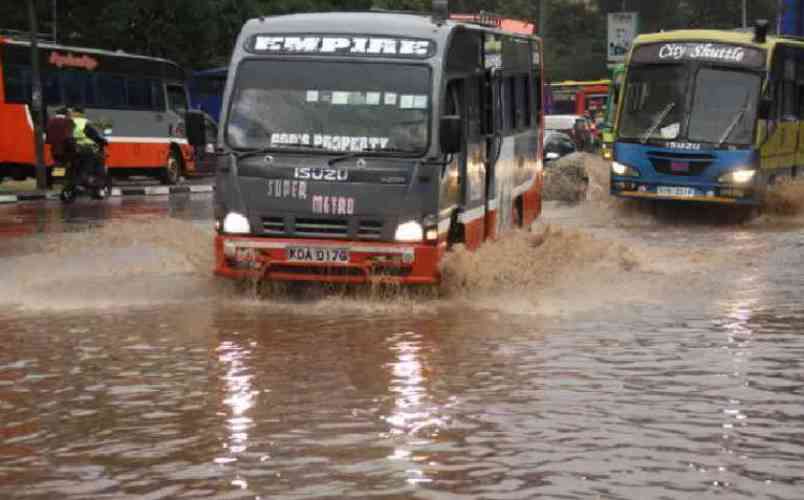
Heavy rainfall is once again testing Nairobi’s drainage systems, with flooded roads, struggling motorists and disrupted movement raising questions about the city’s preparedness for the anticipated El Niño-enhanced rainy season. Nairobi’s Central Business District and surrounding neighbourhoods are facing renewed concerns over flooding as heavy rainfall continues to affect parts of the capital.
Nairobi’s Cen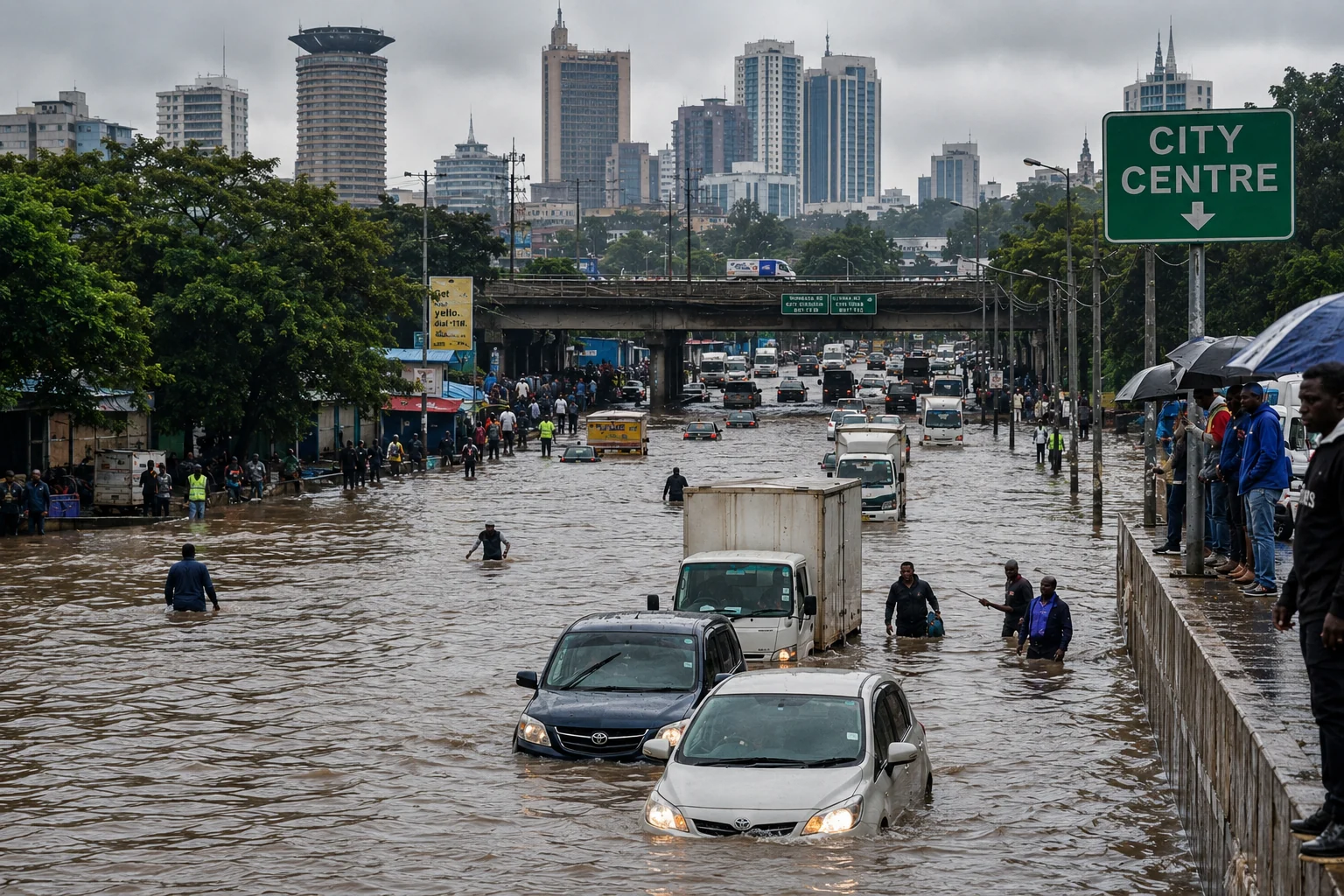 tral Business District and surrounding neighbourhoods are facing renewed concerns over flooding as heavy rainfall continues to affect parts of the capital.
On October 24, 2026, images emerged showing pedestrians navigating flooded sections of Nairobi CBD, while other parts of the city, including Parklands, also experienced waterlogging. The situation gained further attention on Saturday, October 31, when sections of First Avenue in Parklands flooded following morning showers, leaving motorists struggling to navigate the affected road.
The incidents have renewed questions about whether Nairobi’s drainage infrastructure can withstand prolonged rainfall and intense downpours expected during the October–December rainy season. For thousands of people who depend on the CBD for work, business and daily activities, flooding presents several challenges.
Challenges caused by floodings
1. Transport and traffic disruption
Flooded roads slow down vehicles, increase traffic congestion and make movement difficult for motorists and public service vehicles.
Flooded walkways force pedestrians to navigate waterlogged sections of the city, sometimes making it difficult to identify open drainage channels, uneven surfaces and other road hazards.
Pedestrians also face difficulties crossing waterlogged streets, while commuters risk delays reaching workplaces, schools and other destinations.
2. Businesses counting losses
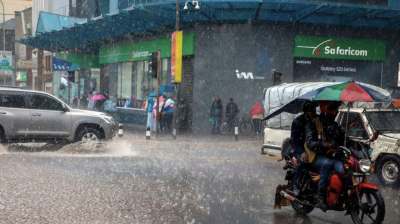
Small businesses, street vendors, shopkeepers and other traders face the risk of reduced customer traffic during heavy rainfall.
Floodwater entering business premises can damage merchandise, equipment and other property. Businesses operating in low-lying buildings are particularly vulnerable.
3. Pedestrians exposed to safety risks
Floodwater may also contain sewage, waste and other contaminants, creating additional public health concerns.
4. Public health concerns
The Ministry of Health has warned that flooding can contaminate water sources and increase the risk of waterborne diseases, including cholera and typhoid. Standing water can also create breeding grounds for mosquitoes, increasing the risk of mosquito-borne illnesses. Residents therefore face risks beyond the immediate disruption caused by rainfall.
Nairobi’s flooding problem is not caused by rainfall alone.
Blocked drainage channels, accumulated waste, construction along waterways, inadequate drainage capacity and development in flood-prone areas all contribute to the problem. When large volumes of rain fall within a short period, drainage systems can become overwhelmed, causing water to accumulate on roads and in surrounding neighbourhoods.
On October 12, Nairobi Governor Johnson Sakaja disclosed that the county had identified 227 flood-prone hotspots across its 17 sub-counties. He also revealed that approximately 100,000 residents could face potential displacement under a worst-case flooding scenario. At the time, 26 of 61 critical drainage sites had reportedly been cleared, with further river rehabilitation and drainage works underway. The governor said the county required approximately KSh5.17 billion for drainage clearance and related flood-mitigation works.
The flooding witnessed in parts of Nairobi raises an important question about the city’s ability to cope with heavier and more prolonged rainfall. With 227 flood-prone hotspots identified and approximately 100,000 residents potentially facing displacement in a worst-case scenario, preparedness will need to go beyond announcements and drainage-cleaning exercises.
For CBD workers, traders, motorists and pedestrians, the effects of flooding are not simply about inconveniences caused by rain. They concern livelihoods, public safety, business continuity and the reliability of the city’s infrastructure. As the rainy season progresses, the effectiveness of ongoing mitigation measures will become increasingly important.