

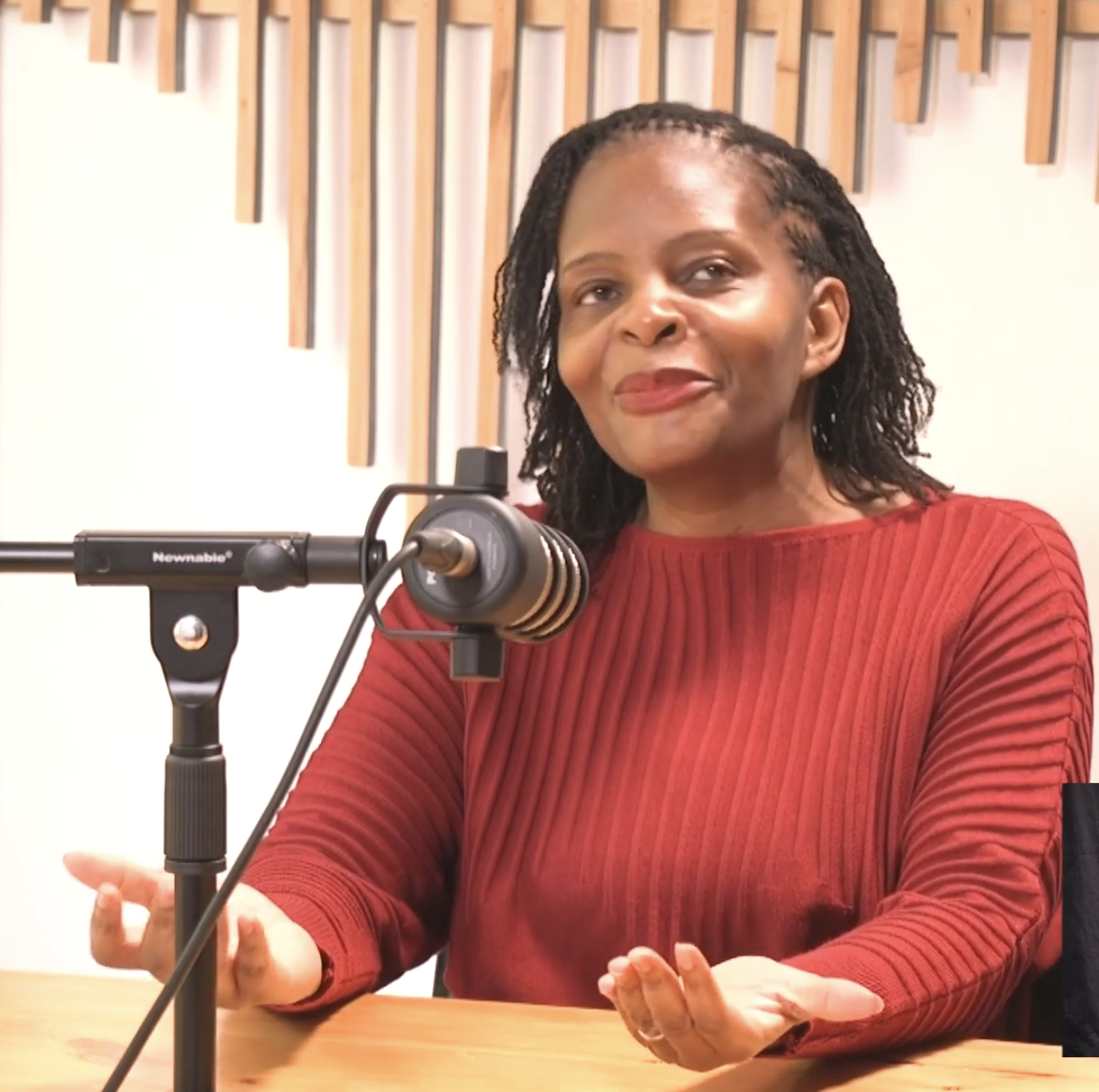
From village dreams to transforming journalism in Kenya and beyond
With nearly two decades in television production, mentorship, and journalism, Jackline Lidubwi has become one of Kenya’s most influential media professionals. Her journey—from a village girl who dreamed of becoming a teacher to an authority on disability reporting and women’s empowerment—is a testament to the power of vision, dedication, and service.
The Making of a Mentor
Jackline’s career at Kenya Broadcasting Corporation (KBC) gave her something invaluable: the opportunity to shape the next generation of media professionals. “If I visit any media station, be it an upcoming one, I’ll find my babies,” she says with evident pride. Her mentees include household names—from Academy Award winner Lupita Nyong’o, who presented for
Kilele while still in high school, to comedian Churchill, who worked with her on
Kisulisuli.
But Jackline’s commitment to mentorship wasn’t born in a vacuum. She herself was nurtured by industry pioneers like Grace Makuku at Metro Television and Kibwana Onguso, the legendary producer of
Tausi and
Kisulisuli. “I had men and women who gave me an opportunity to shine,” she reflects. “I promised myself I’d give as many people the same opportunity.”
Her philosophy is simple but powerful: produce only the first season of a show, then empower your production assistant to take over. This approach has ensured the longevity of her programs, including
Grapevine, which started in 2002 and continues today. “If you die, you’ll die with your show,” she warns. “That’s why my shows will continue, whether I’m at KBC or not.”
 From Village Dreams to Media Pioneer
Growing up in a rural village, Jackline’s aspirations were limited by what she could see around her. “I wanted to become a madam and be married by a high school teacher,” she admits with a laugh. Teachers were the most prestigious figures in her community, so that’s what she aimed for.
Everything changed when she had a dream—literally. “I was in a studio, seeing the machines,” she recalls. That vision planted a seed, leading her to wonder about communication schools and how radio presenters got their start. Her first visit to KBC felt like destiny unfolding. “I knew the hosts from magazines. For me, it was a dream come true.”
At the Kenya Institute of Mass Communication (KIMC), Jackline specialized in radio, making her eventual television career “a mistake”—albeit a fortuitous one. She completed internships at Kenya News Agency and Standard Newspaper before landing at KBC’s Metro Television. Her academic journey didn’t stop there. Driven by the need to compete with university graduates, she pursued a degree at St. Paul’s University, where she excelled, earning multiple awards. She followed up with a master’s at the University of Nairobi and is now working toward her PhD, motivated by a desire to bridge the gap between academic theory and practical media skills.
Abled Differently: Changing the Narrative
Perhaps Jackline’s most groundbreaking work has been in disability reporting. Her show
Abled Differently was born from a simple but profound realization. After interviewing professors and lawyers with disabilities on her earlier program
Taj: Touching Lives, she was struck by the disconnect between their accomplishments and society’s perception of people with disabilities.
“When we see people with disability, most of the time we just see street people, beggars,” she explains. “But these were professors, lawyers, top people. It changed my perspective completely.”
Abled Differently wasn’t just another show—it was a mission to highlight the positive portrayal of persons with disabilities. “The media is the mirror of society,” Jackline emphasizes. “If we keep seeing people with disability as poor, as people who don’t deserve, our mentality will never change. But if we see them as Isaac Mwaura, who is a government spokesman, or Jane Theuri, who is a commissioner and presenter, our mindset will start changing.”
The show won multiple awards and took Jackline around the world. It even led to her departure from KBC to join Internews, where she trained journalists across Sub-Saharan Africa on disability reporting. “One of my cameramen told me, ‘You’ve done so many shows, but this one is going to take you places.’ He was right.”
Her work taught her important lessons about language and representation. Through research fellowships and collaboration with disability leaders at the University of Massachusetts, she learned the proper terminology: “person with disability,” not “disabled” or “physically challenged.” “They are people first before their disability,” she explains. “When you say ‘disabled,’ you see their disability and not the people.”
Training the Next Generation
At Internews, Jackline’s work extended across Tanzania, the Democratic Republic of Congo, Côte d’Ivoire, Liberia, and Kenya. She trained journalists and editors on proper disability terminology, story angles, and interview techniques. The results were transformative.
“A story was produced and a wheelchair was bought. A child got sponsorship. A whole school was fenced because students with mental disabilities could run away,” she recounts. “That was the power of media.”
Working with Dr. John from Murang’a University, she helped establish a disability reporting unit for journalism students—filling a critical gap in journalism education. “When you go to school and finish all four years, there’s no unit where you’ll be taught about disability,” she notes. The curriculum covers understanding various disabilities, proper language and terminology, interviewing skills, story mapping, and multimedia techniques.
True to the disability movement’s mantra—”nothing about us without us”—Jackline also worked directly with organizations of persons with disabilities, teaching them to harness social media’s power. In Côte d’Ivoire, women with disabilities learned to showcase their artwork on Facebook, connecting with supporters and organizations they’d never reached before.
Women at the Forefront
Jackline’s commitment to amplifying marginalized voices extends to gender equality. Her
Women at the Forefront segment on
Good Morning Kenya provided a platform for women making a difference in Kenyan society—women who rarely get airtime in male-dominated political debates and talk shows.
“Women have problems,” she observes candidly. “You’ll call them for an interview and they’ll be thinking about their makeup, their hair, their children. But a man will just show up.” Her solution? Give women advance notice and preparation time. “If I want to interview a woman next week, I’ll start preparing them this week.”
The principle mirrors her work in disability advocacy: representation matters. “The more we see women in media, the more we appreciate that women are doing so many things. The more we see people with disability talking about politics, education, farming, the more we appreciate their capabilities.”
On the current femicide crisis in Kenya, Jackline is unequivocal: victim-blaming must stop. “When young ladies are being killed, we say ‘why did they go, why are they looking for money?’ We are blaming the victims. We need male champions to come out and tell men this is not right. These are our sisters, our mothers. Killing is not something you can justify.”
A Life of Service
Inspired by Mother Teresa, Jackline has always been driven by a desire to serve. “I want to be that Mother Teresa in someone’s life,” she says. “I want to make a difference and change society.”
This impulse manifested early. As a young girl who found a five-shilling coin, she gave it to her family’s house help instead of keeping it. The woman used it to buy maize flour, feeding her children who would have otherwise gone to bed hungry. “At that tender age, I knew if you do something good to someone, it brings a lot of happiness.”
That philosophy guided her to educate her house helps, sending them to teacher training colleges. One is now a high school teacher, another teaches primary school. “This was a girl who didn’t have anything, who just wanted to become a house girl. But now her life has changed. She can educate all her siblings and live a good life.”
At KBC, she organized annual charity concerts, bringing together gospel artists and preachers to visit children’s homes. Many children found sponsors through these events. She also served as a founding board member of the Riziki Source Hub, a digital platform connecting people with disabilities to job opportunities.
“People with disability are out there with certificates, and no one will employ them,” she explains. “You’ll go with your certificate and someone will think you’ve come to beg. The Riziki Source Hub helps them connect with the job market.”
Lessons in Legacy
When asked about challenges, Jackline pauses. “I’ve just been having fun, trying things, trial and error, just going. I’ve never had like the biggest challenge.”
The one notable bump came when she relaunched the beloved show
Vioja Mahakamani with new faces and characters. While the younger generation embraced it, longtime fans resisted the change. Yet even this taught her about succession planning. When original actor Gibson passed away, her protégé seamlessly stepped into the prosecutor role. “It moved smoothly because it was people who had been prepared,” she notes. “That is continuity.”
Her approach to work embodies a crucial truth: “We will not be here forever. Today I’m here, tomorrow I might not be. So I’m not supposed to die with my talent. I’m supposed to give away everything I know so that I can die empty.”
Looking Forward
For aspiring media professionals, Jackline’s message is one of possibility and perseverance. “Everything is possible in this world. You just need to focus. When you focus, you can achieve everything.”
Reflecting on her journey from a village girl with limited dreams to an internationally recognized authority on disability reporting and media training, she marvels: “I came from far, and I think I’m going far. I’ve gone far until I myself don’t believe it. If you believe and you focus, everything is possible.”
Her final advice? “Never just relax and never get content with whatever you have.” And for those in media specifically, she points to Internews, which regularly offers training programs, story grants, and opportunities for upcoming journalists.
Through mentorship, groundbreaking programming, international training, and unwavering service, Jackline Lidubwi hasn’t just built a career—she’s built a legacy that will continue empowering voices long after her own goes silent. And that, perhaps, is the greatest achievement of all.


