


Imagine this: a plane crashes, lives are lost, and amidst the chaos, banknotes are scattered across the scene. What’s your first instinct? For many, it would be shock, grief, perhaps even fear. But in Bolivia, after a military cargo plane went down, a different, more unsettling scene unfolded: crowds allegedly scrambling for the scattered cash, leading to tear gas and clashes with police. It’s a tragic story that, while happening thousands of miles away, echoes a raw, uncomfortable truth about human desperation and the relentless pursuit of survival in tough economic times. It makes you wonder, what would happen if such a thing occurred on our streets?
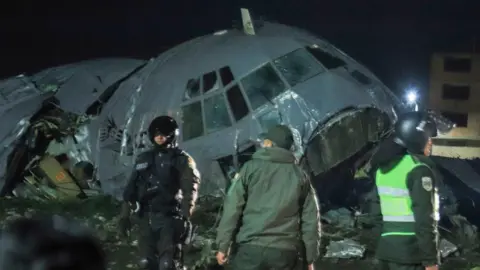
So, what exactly went down? A Bolivian air force C-130 Hercules cargo plane, carrying banknotes destined for the Central Bank of Bolivia, crashed in the western city of El Alto. The incident, which occurred on a Friday evening, saw the plane reportedly skid off the runway, hitting nearby vehicles. The tragedy claimed at least 15 lives and left 31 people injured. But the story took a wild turn when, amidst the wreckage, banknotes were found scattered. Police had to fire tear gas to disperse crowds who were allegedly trying to grab the money. Journalists covering the scene were also attacked, with some sustaining injuries. Authorities later confirmed that at least a dozen people were arrested for attempting to steal the cash. The Minister of Defence, Marcelo Salinas, quickly clarified that the money had no legal value as it hadn’t been issued by the Central Bank and lacked serial numbers, making any attempt to use it a crime. While investigations are ongoing, treacherous weather, including a heavy hailstorm and lightning, is being considered as a possible cause.
Why This Matters to Kenyans: The Thin Line Between Survival and Crime
This isn’t just a foreign news item; it’s a stark reflection of the pressures many Kenyans face daily. Here’s why this story should hit home:
- Economic Hardship & Desperation: In a country where unemployment is high and the cost of living is constantly biting, the temptation of ‘free money,’ even under tragic circumstances, can be overwhelming for those struggling to make ends meet. It highlights the thin line between survival and desperate acts.
- The Lure of Quick Money: The idea of banknotes, even valueless ones, scattered on the ground speaks to a universal human desire for a quick fix to financial woes. It’s a reminder of how easily people can be swayed by the promise of instant wealth, often without considering the consequences.
- Breakdown of Order: The scenes of crowds clashing with police and attacking journalists paint a picture of societal breakdown in the face of chaos. It makes us question how communities respond under extreme pressure and whether basic human empathy can be overshadowed by perceived opportunity.
- The ‘What If’ Factor: Imagine a similar scenario in a densely populated area in Kenya. The potential for chaos, looting, and further tragedy is a chilling thought, underscoring the need for strong social structures and economic stability.
Street Talk: “Pesa Ni Pesa, Ama?”
 If this happened here, the conversations would be wild. In the matatus and kibandas, you’d hear a mix of judgment and understanding. “Pesa ni pesa, ama?” (Money is money, right?) some might argue, understanding the desperation that could drive someone to such an act. Others would condemn it, emphasizing respect for the dead and the rule of law. But beneath it all, there’s a shared understanding of the grind. Many would reflect on how quickly circumstances can push people to extremes, especially when hunger is a constant companion. The question wouldn’t just be about the morality of taking the money, but about the systemic failures that create such desperate situations in the first place.
The Unseen Angle: Beyond the Headlines, The Human Cost
While the headlines focus on the crash and the cash, the deeper story is about the human condition under duress. This incident exposes several overlooked aspects:
- The Illusion of Wealth: The fact that the banknotes were legally worthless is a cruel twist. It highlights how easily desperation can blind people to reality, chasing an illusion of wealth that offers no real solution.
- The Role of Media in Crisis: The attack on journalists is a critical point. In chaotic situations, the media plays a vital role in informing the public, yet they often become targets. This underscores the dangers faced by those trying to bring us the truth, even in the midst of tragedy.
- Societal Resilience vs. Fragility: The incident tests the resilience of a community. While some rushed to help, others allegedly rushed to grab. It’s a snapshot of how quickly order can unravel when basic needs are unmet and trust in institutions is low.
- The Weight of Poverty: This event, though extreme, is a dramatic illustration of how poverty can warp perceptions and drive actions that would otherwise be unthinkable. It’s a call to reflect on the broader societal responsibility to create environments where such desperation is less likely to occur.
This isn’t just about a plane crash; it’s about the crash of hope, the desperation that can lead people to make unthinkable choices, and the fragile line between order and chaos when basic human needs are unmet.
Real Talk Reflection: “Ni Hardship Tu”
Let’s be real. While we condemn looting, a part of us understands the raw, visceral reaction of people who see an opportunity, however tragic, to escape their daily struggles. “Ni hardship tu,” someone might sigh, acknowledging the immense pressure that can lead to such actions. It’s not an excuse, but an explanation of the deep-seated economic pain that can override judgment. The incident forces us to confront uncomfortable questions about our own society: how close are we to such a scenario? What would we do? And more importantly, what are we doing to prevent such desperation from taking root in our communities?
The Unfolding Story: A Mirror to Our Own Struggles
The Bolivian plane crash, with its tragic loss of life and the bizarre scramble for scattered cash, serves as a powerful, albeit distant, mirror to our own societal struggles. It’s a reminder that beneath the surface of everyday life, economic pressures can create immense desperation, pushing individuals to the brink. For the youth of Kenya, who navigate a landscape of limited opportunities and constant financial strain, this story isn’t just about Bolivia; it’s about the universal human struggle for dignity and survival. Kelele Digital will continue to highlight these stories, pushing for conversations that go beyond the headlines and delve into the real human impact of economic realities. Will we learn from such tragedies, or will we continue to ignore the underlying desperation until it erupts closer to home? The answer lies in our collective commitment to building a more equitable and just society for all.


