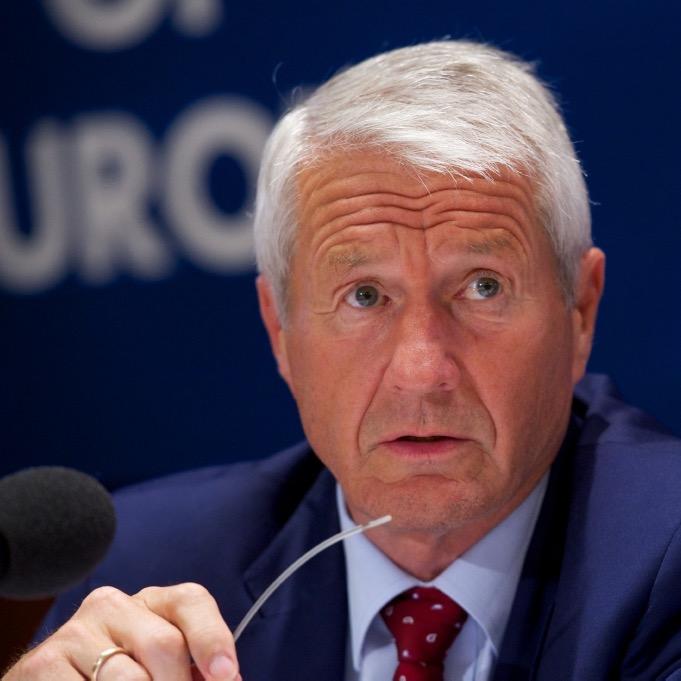
In a development that has sent ripples across the international political landscape, Norway’s former Prime Minister, Thorbjørn Jagland, finds himself at the centre of a grave corruption investigation. The charges stem from his alleged connections to the late American financier and convicted sex offender, Jeffrey Epstein. This saga, unfolding in a seemingly distant Nordic nation, carries universal themes of accountability, power, and ethical conduct that resonate deeply, even here in Kenya, where public trust in leadership is a constant discourse.
The Charges and the Unravelling of Immunity
Norwegian police have formally charged 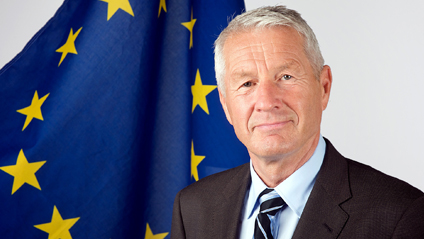 Thorbjørn Jagland with “gross corruption” due to his association with Jeffrey Epstein. This significant step followed the Council of Europe’s decision to lift Jagland’s diplomatic immunity, a privilege he held from his decade-long tenure as the Council’s secretary-general (2009-2019). Jagland, who also served as Norway’s Prime Minister from 1996 to 1997 and chaired the Nobel Peace Prize committee until 2015, has vehemently denied criminal liability, with his lawyer stating his full cooperation with the ongoing investigation .
Thorbjørn Jagland with “gross corruption” due to his association with Jeffrey Epstein. This significant step followed the Council of Europe’s decision to lift Jagland’s diplomatic immunity, a privilege he held from his decade-long tenure as the Council’s secretary-general (2009-2019). Jagland, who also served as Norway’s Prime Minister from 1996 to 1997 and chaired the Nobel Peace Prize committee until 2015, has vehemently denied criminal liability, with his lawyer stating his full cooperation with the ongoing investigation .The investigation by Norway’s economic crimes unit, Økokrim, began after allegations of gross corruption surfaced, covering the period between 2011 and 2018. The lifting of immunity was crucial, allowing authorities to proceed with their probe into a figure once referred to by Epstein as “the Nobel big shot” .
Revelations from the Epstein Files
The core of the allegations against Jagland emerges from the extensive cache of emails and documents released by the US Department of Justice. These files suggest that Jagland and his family planned multiple visits to Epstein’s luxurious properties in Paris, New York, and Palm Beach, even after Epstein’s initial conviction for a child sex offence .
Further scrutiny of these documents indicates instances where Epstein allegedly covered travel expenses for Jagland and his family. One notable revelation includes a planned family trip to Epstein’s private Caribbean island in 2014, which was ultimately cancelled due to Epstein’s illness . Additionally, there are claims that Jagland sought Epstein’s assistance in securing a bank loan, though it remains unclear if this transaction ever materialised . While mere mention in the Epstein files does not automatically imply wrongdoing, these revelations paint a concerning picture of the interactions between a high-ranking public official and a notorious figure.
Police Raids and Broader Implications
In a clear sign of the seriousness of the investigation, Økokrim conducted searches at three of Jagland’s properties – his residence in Oslo and two others in Risør and Rauland in southern Norway. Images from Norwegian television showed authorities carrying boxes from his Oslo apartment, with Jagland himself seen leaving the premises alongside his lawyer . His lawyer has described these searches as standard procedure, affirming Jagland’s desire for a thorough clarification of the case .
This scandal extends beyond Jagland, ensnaring other prominent Norwegian figures. The wider release of the Epstein files has implicated Crown Princess Mette-Marit, who has publicly apologised for her friendship with Epstein, acknowledging three years of exchanged messages . Diplomats Mona Juul and Terje Rød-Larsen are also under investigation for “aggravated corruption,” with reports suggesting their children were beneficiaries in a will allegedly signed by Epstein . Even Borge Brende, CEO of the World Economic Forum and a former Norwegian foreign minister, is facing an independent review over his interactions with Epstein, despite claiming ignorance of Epstein’s criminal past .
A Call for Transparency and Accountability
The unfolding events in Norway serve as a stark reminder that no individual, regardless of their stature or past achievements, is above the law. For a Kenyan audience, this narrative resonates with ongoing calls for transparency and accountability in public service. The idea that diplomatic immunity can be lifted to allow for criminal investigation underscores a principle that many Kenyans advocate for: that justice should be blind to status.
This case highlights the intricate web of influence and the ethical dilemmas faced by leaders when their personal associations intersect with their public duties. It prompts reflection on the importance of due diligence and the potential for reputational damage, not just to individuals but to national institutions. As the investigation progresses, the world watches, hoping for a resolution that upholds the principles of justice and integrity.