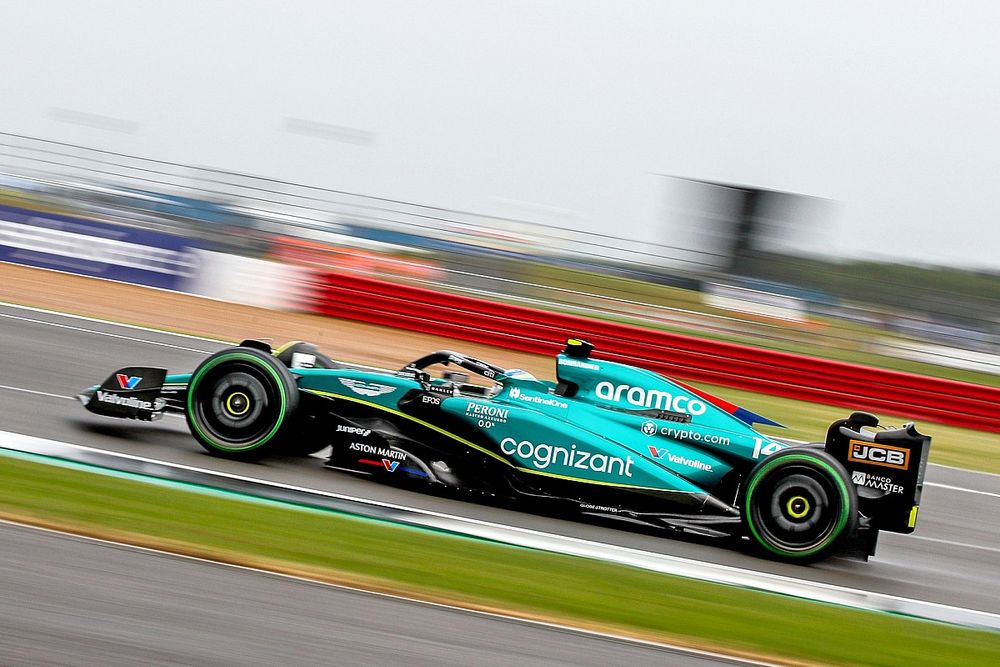
Imagine spending billions of shillings on a new ride, only for it to feel like it’s giving you an electric shock every time you drive it. That’s the insane reality for Formula 1 team Aston Martin right now. As the F1 season kicks off in Australia, their brand-new car, powered by a new Honda engine, isn’t just slow—it’s physically hurting its drivers, the legendary Fernando Alonso and Lance Stroll. This isn’t just a technical glitch; it’s a full-blown crisis that’s got the whole racing world talking.
So, here’s the tea. Aston Martin switched to Honda engines for the 2026 season, expecting that championship-winning magic. Instead, they got a nightmare. The new engine is vibrating so violently that it’s not only damaging the car but also causing real physical harm. Lance Stroll compared the feeling to being “electrocuted in a chair.” Fernando Alonso says he’s feeling his fingers and feet go numb after just a few laps. The team’s own chief, Adrian Newey, has openly admitted that he doubts either car can even finish the first race. It’s a public, high-stakes disaster.
Why This Matters to Kenyans
 Okay, so why should you, hustling in Nairobi, care about a bunch of million-dollar cars having a bad day? Because this is a story about what happens when ambition meets a brutal reality check. We all have big dreams, right? We see the latest tech, the new hustle, the next big thing, and we want in. This story is a raw reminder that the road to success is almost never smooth. It’s a lesson in failure, humility, and the fact that even the biggest names with the most money can get it spectacularly wrong. For any young Kenyan entrepreneur, designer, or techie, this is a masterclass in crisis management and the importance of getting the fundamentals right before chasing the hype.
Street-Level Talk: The “Fundi” Perspective
Think about the last time your car had a weird noise and you took it to your trusted fundi (mechanic). They probably listened, shook their head, and said, “Hii ni shida kubwa” (This is a big problem). Now, multiply that by a billion. The engineers at Honda and Aston Martin are the most high-tech fundis in the world, and even they are struggling to find the “root cause.” It’s a relatable problem on an unrelatable scale. You can almost hear the debates in a downtown Nairobi garage: “Wali-rush hiyo design!” (They rushed the design!) or “Hao Wajapan, wamezingua!” (Those Japanese guys messed up!). It brings this elite, global sport right down to a level we can all understand: sometimes, the machine just doesn’t work.
The Overlooked Angle: The Human Cost of Innovation
 Everyone is focused on the broken engine and the lost race points, but let’s talk about the real humans in the cockpit. Fernando Alonso and Lance Stroll are being asked to drive a machine that could cause them “permanent nerve damage.” Let that sink in. In the relentless pursuit of being faster and more innovative, a line is being crossed where human safety is at risk. This isn’t just about winning; it’s about the physical sacrifice drivers are expected to make. It forces us to ask a tough question: how much is too much? In a world obsessed with pushing limits, this is a powerful story about the ethical responsibility that comes with innovation, whether you’re building an F1 car or a new app.
Real Talk Reflection: When Your Big Bet Fails
We’ve all been there. You take a big risk, invest your time, your money, your hope… and it just doesn’t work out. That’s what Aston Martin is feeling right now, but on a global stage with millions watching. There’s the public embarrassment, the frantic search for solutions, and the pressure from all sides. The Honda team admits they don’t know how long it will take to fix. It’s a raw, unfiltered look at failure. It’s a reminder that even with a proven track record (Honda powered the last four championships), past success guarantees nothing. It’s a humbling, and honestly, a very human story.
So as you watch the F1 highlights, look beyond the fast cars. See the story of a high-tech dream that turned into a vibrating nightmare. It’s a cautionary tale about ambition, a lesson in crisis management, and a stark reminder that even at the pinnacle of human engineering, things can, and do, go horribly wrong. And in that failure, there’s a lesson for all of us.