Yo, fam! Just when you thought Nairobi politics couldn’t get any spicier, Senator Edwin Sifuna has dropped a bombshell, calling out the recent “Cooperation Agreement” between the National Government and Nairobi County as nothing short of a covert takeover. While Governor Johnson Sakaja was all smiles at State House, signing what was touted as a deal to fix our beloved city, Sifuna is here with the receipts, questioning everything from public participation to the very spirit of devolution. Is this a genuine partnership for Nairobi’s good, or are we witnessing another NMS-style power grab?
So, What’s the State House Drama All About?
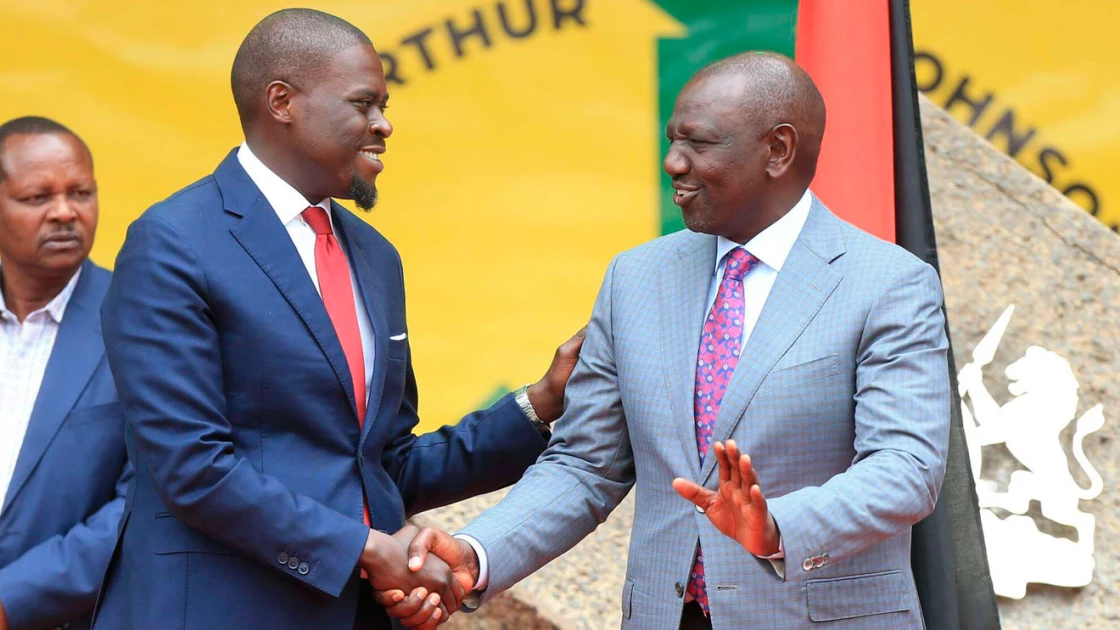
 Earlier this week, President William Ruto and Governor Johnson Sakaja put pen to paper on a “Cooperation Agreement” that supposedly covers four critical areas for Nairobi. On the surface, it sounds like a plan to streamline services and inject much-needed funds into the capital. But Senator Sifuna, who serves as the area Senator and is constitutionally mandated to defend counties, is having none of it. He’s calling foul, arguing that the deal violates the Constitution and the very principles of devolution.
Sifuna points out that his office, and indeed the public, were neither involved nor consulted before this agreement was inked. He highlights a glaring clause in the agreement itself that admits to no public participation, promising it after the fact. Talk about putting the cart before the horse! He questions President Ruto’s sudden interest in the Urban Areas and Cities Act, especially after 14 years at the helm of political leadership, wondering why this “cooperation” only surfaces less than 18 months before the 2027 elections.
Why This Matters to Kenyans (Especially Nairobians!)
This isn’t just political grandstanding; it’s about who truly runs Nairobi and, by extension, who serves its millions of residents. Devolution was fought for, hard, to bring governance closer to the people. If the county government can quietly hand over its functions to the national government, what does that mean for accountability? Who do you hold responsible when things go wrong?
For the average Nairobian, this could mean a return to the days when City Hall felt distant and unresponsive, with decisions made far from the mwananchi. It impacts everything from garbage collection and road maintenance to water supply and planning – the very services that define our daily hustle. If the Governor, who you elected, is essentially becoming a “Deputy Governor” to the Prime Cabinet Secretary, as Sifuna suggests, then where does your vote’s power truly lie?
The Street-Level Perspective: Déjà Vu and the NMS Ghost
Many Nairobians are getting a strong sense of déjà vu. The last time key county functions were transferred to the national government, we got the Nairobi Metropolitan Services (NMS). While NMS had its proponents, it also left a trail of unanswered questions, including a whopping Kshs 16 billion in pending bills. Governor Sakaja himself, just last week, derided the “NMS experiment” and vowed never to engage in similar “misadventure.” Yet, here we are.
This agreement, for many on the streets, feels like a continuation of that model. It raises fears of opaque financial dealings, weak audit systems, and a culture of unpaid bills that cripples local contractors and suppliers. The question echoing in matatus and WhatsApp groups is: are we trading one set of problems for another, or worse, just repackaging the old ones?
The Overlooked Angle: The Constitutional Bypass and Financial Juggling
 Sifuna’s statement dives deep into the constitutional implications. He argues that the agreement bypasses established legal frameworks for intergovernmental relations and financial transfers. He points out that the steering committee overseeing the agreement is heavily skewed towards the national government, making it look less like cooperation and more like a takeover.
Crucially, Sifuna highlights that the National Government owes Nairobi over Kshs 100 billion in unpaid rates and other payables. He suggests that instead of a “cooperation agreement,” the President should simply direct national government agencies to clear their debts, allowing the County Assembly to ring-fence those funds for development projects like roads, markets, and drainage. He also calls for the transfer of all county functions back to counties, as per the MOU signed with Raila Odinga, and the disbandment of agencies like KURA and KeRRA, channeling their budgets to Nairobi County Government.
Real Talk Reflection: Who’s Really Benefiting from This ‘Cooperation’?
This whole saga leaves a bitter taste. Is this agreement truly about improving Nairobi, or is it a strategic move to consolidate power and control resources? When public participation is an afterthought, and constitutional procedures seem to be sidestepped, it’s hard not to be cynical. Sifuna’s challenge to the President – to govern within the confines of the law and utilize existing legal instruments for funding – resonates with many who are tired of political theatrics.
It’s a stark reminder that while leaders talk about development, the how matters just as much as the what. If development comes at the expense of transparency, accountability, and the spirit of devolution, then what kind of legacy are we building?
The Final Verdict: Defending Devolution, One Agreement at a Time
Senator Sifuna’s defiant stance is a crucial moment for devolution in Kenya. He’s urging both parties to shelve this agreement, calling for fidelity to the Constitution and genuine public engagement. For Nairobians, this is a call to vigilance. We need to demand transparency, question authority, and ensure that our elected leaders are truly serving our interests, not just engaging in secret elopements between State House and City Hall. The future of our city, and indeed our democracy, depends on whether we allow these “cooperation agreements” to become convenient bypasses for accountability. Let’s keep our eyes peeled, fam, because the fight for Nairobi’s soul is far from over.
Copyright © 2026 All rights reserved