Corruption. It’s a word that, for many Kenyans, conjures images of stalled projects, empty promises, and public funds vanishing into thin air. It’s a narrative we’ve heard too often, and sadly, it’s one that continues to plague our nation’s progress. Today, the spotlight shines brightly on a case that harks back to the ill-fated 2018 Africa Nations Championships (CHAN), where dreams of hosting a prestigious continental tournament turned into a nightmare of alleged fraud.
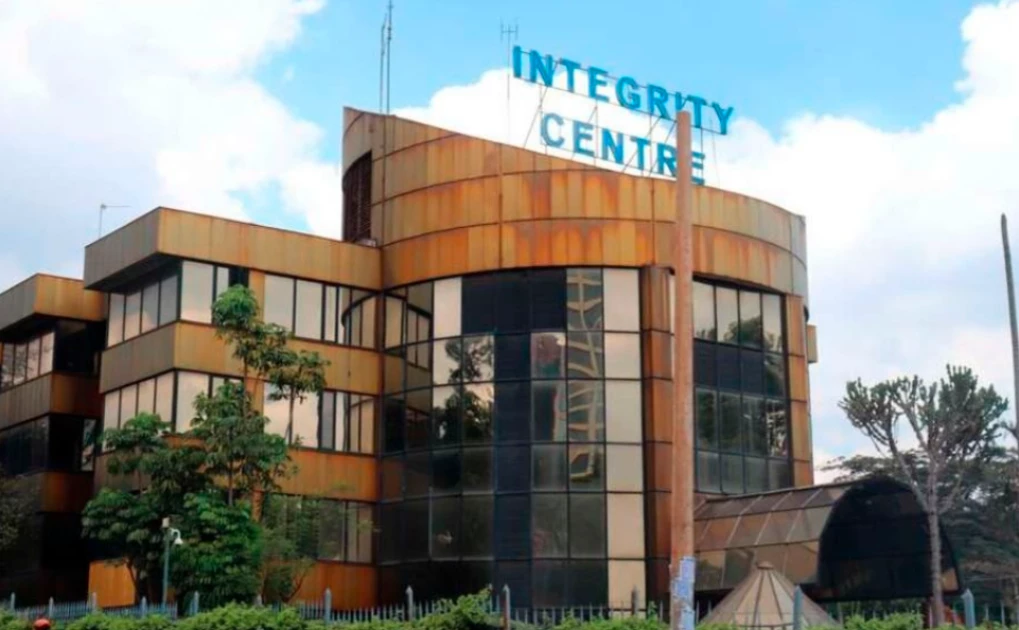
The Ethics and Anti-Corruption Commission (EACC), our national watchdog against graft, has once again stepped up, filing a robust civil suit to reclaim a staggering Sh330 million. This isn’t just about numbers; it’s about accountability, integrity, and ensuring that public resources, meant to uplift our communities, are not diverted for personal gain. The EACC is targeting former top sports officials, including former Sports PS Peter Kirimi Kaberia and the erstwhile Football Kenya Federation (FKF) President Nick Mwendwa, among others, for their alleged roles in a scheme that saw millions disappear without a trace.
The Grand Promise: A Stadium Upgrade That Never Was
Back in 2017, the air was thick with anticipation. Kenya was gearing up to host CHAN 2018, a golden opportunity to showcase our sporting prowess and hospitality to the continent. To meet the stringent requirements of such an event, a massive contract was awarded for the design, supply, testing, commissioning, and supervision of critical infrastructure. We’re talking about state-of-the-art security systems, efficient access control, seamless communications, cutting-edge audiovisual equipment, and brilliant pitch lighting for various stadiums across the country. The total price tag? A colossal $15,892,980.63, which translated to roughly Sh1.5 billion at the time.
The contract was handed to Auditel Kenya by the State Department for Sports Development, under the then Ministry of Sports, Culture and the Arts. It was a promise of modern facilities, a boost for local sports, and a point of national pride. Yet, as the EACC’s investigations painfully revealed, this grand vision remained just that – a vision. Not a single piece of equipment was delivered, no systems installed, and our stadiums remained far from ready. It was a classic case of mali ya umma (public property) being treated with utter disregard.
The Signatories and the Shadowy Advance Payment
At the heart of this contractual quagmire were key figures. The agreement was formally signed by Peter Kirimi Kaberia, representing the Government of Kenya, and Marcos Gonzalez Puente, on behalf of Auditel Kenya. Adding weight to the proceedings, former FKF President Nick Mwendwa and Herbert Mwachiro, the CHAN 2018 Event Director, were listed as witnesses. Their involvement underscores the high-level nature of the deal and, consequently, the gravity of the alleged malfeasance.
One of the most glaring red flags, a detail that would make any Kenyan taxpayer raise an eyebrow, was the advance payment. A mere month and nine days after the contract was signed, Auditel Kenya wasted no time in issuing an invoice for an advance of $3,687,171.51 (approximately Sh475 million). A substantial chunk of this – Sh330,572,998.00 – was then wired to Auditel Kenya’s account in Madrid, Spain, on January 19, 2018. The EACC’s findings are unequivocal: this payment was made without the mandatory Milestone Completion Certificate. This certificate is not just a piece of paper; it’s a crucial safeguard, a guarantee that a certain level of work has been achieved before public funds are released. Its absence here screams of procedural shortcuts and a blatant disregard for financial prudence.
The Unraveling: Following the Money Trail
For many Kenyans, the question often is: where does the money go? The EACC’s meticulous tracing of the funds in this case offers a disturbing answer, painting a picture of alleged kickbacks and money laundering that benefited various individuals and entities connected to the procurement process. After Auditel Kenya received the millions, the funds allegedly began to circulate:
•Restea Enterprise Ltd: This entity reportedly received over Sh25.6 million from Auditel Kenya on March 15, 2018.
•Leasepride Limited: Received two separate payments from Auditel Kenya, totaling over Sh9 million (Sh2,960,928 on January 29, 2018, and a further Sh6,061,422.24 on May 7, 2018).
•Leasepath Limited: An entity directly linked to Marcos Gonzalez Puente, also allegedly received nearly Sh3 million (Sh2,960,928.00) from Auditel Kenya on January 29, 2018.
The alleged illicit flow of funds didn’t stop at companies. Individuals directly involved also reportedly benefited:

•Alex Kilingi and Nick Mwendwa: These two allegedly received over Sh1.59 million from Muema Kitheka, a director of Restea Enterprise Ltd, and an additional Sh999,200 directly from Restea Enterprise Ltd.
•John Ruga: An engineer at Sports Kenya and a key liaison person, is alleged to have received Sh3.5 million and Sh200,000 from Mwendwa on January 9 and January 10, 2018, respectively, totaling Sh3.7 million.
These transactions, if proven, illustrate a complex web where public funds, meant for national development, were allegedly siphoned off into private pockets, leaving the nation’s sporting infrastructure in limbo.
Auditel Kenya: A Brief, Suspicious Appearance
The company at the center of this financial storm, Auditel Kenya, appears to have had a rather fleeting presence in the Kenyan corporate landscape. Investigations revealed it was a foreign entity, only registering in Kenya on August 25, 2017 – just months before securing the lucrative contract. Its parent company, Auditel Ingenieria y Servicios, S.L., was based in Madrid, Spain. The account signatories were identified as Enock Ondwari Onditi and Stephen Njoroge Muthuma. Adding to the suspicion, the company was dissolved on June 26, 2020, as per Gazette Notice No. 4316. This quick entry, alleged fraudulent activity, and swift exit raise serious questions about its true intentions and whether it was merely a vehicle for illicit financial transactions.
A Cascade of Breaches: The Procurement Laws Ignored

Perhaps the most damning aspect of the EACC’s findings is the alleged wholesale disregard for Kenya’s public procurement laws. These laws are the bedrock of transparent and fair government contracting, designed to protect taxpayer money and ensure value for public funds. The EACC asserts that the procurement of Auditel Kenya was single-sourced, a clear violation of these fundamental principles. This means there was no competitive bidding, no opportunity for other qualified companies to participate, effectively shutting out transparency.
Further breaches highlighted by the EACC include:
•No Approved Purchase Requisition: The procurement was not initiated through the proper channels, as no approved purchase requisition was in place.
•Missing Bid Security: Auditel Kenya failed to furnish a bid security (bid bond), a legal requirement to protect the government in case of non-performance.
•No Letter of Award or Acceptance: There was no official notification of intention to enter into a contract, nor did Auditel Kenya issue a letter of acceptance, indicating a casual and irregular approach to a multi-million-shilling deal.
•Absence of Performance Security: Crucially, no performance security (performance bond) was provided. This bond is a vital safeguard, ensuring that if a contractor fails to deliver, the government has recourse. Its absence left taxpayers exposed.
•No Oversight Teams: Shockingly, no contract implementation team or inspection and acceptance committee was appointed to oversee the execution of the contract. This lack of oversight created a fertile ground for irregularities.
•Unvalidated Bank Guarantee: The advance payment was secured by a bank guarantee from a foreign bank that was not validated by a local bank, further weakening the security of public funds.
These systemic failures paint a grim picture of how public procurement processes were allegedly manipulated, leading directly to the loss of millions and, ultimately, Kenya’s inability to host CHAN 2018. The dream of showcasing our nation on the continental stage was shattered, not by lack of talent, but by alleged greed and mismanagement.
Conclusion: A Fight for Our Future

The EACC’s civil suit is more than just a legal battle; it’s a crucial front in Kenya’s ongoing war against corruption. For ordinary Kenyans, who feel the pinch of every shilling lost to graft, this case represents a beacon of hope – a testament that impunity will not always prevail. The commission is not only seeking to recover the Sh330 million but has also recommended criminal prosecution for abuse of office and other related violations. The investigation file has been forwarded to the Office of the Director of Public Prosecutions (ODPP) for further action, signaling a comprehensive approach to justice.
As this case unfolds in the Anti-Corruption and Economic Crimes Division in Nairobi, the nation watches. We hope that justice will be served, that the millions allegedly siphoned off will be returned to the public coffers, and that those responsible will face the full force of the law. This isn’t just about recovering money; it’s about restoring faith in our institutions, strengthening our governance, and ensuring that every shilling of public funds genuinely serves the people of Kenya. It’s a fight for our future, and one that the EACC, and indeed all Kenyans, must win.