Nairobi, Kenya – For a moment, it felt like a ghost from Nairobi’s recent past had returned to haunt City Hall. Whispers of a State House meeting, followed by headlines alleging a transfer of key county functions to the national government, sent a familiar chill through the city’s political corridors. Was Nairobi on the verge of another Nairobi Metropolitan Services (NMS)-style takeover?
The speculation reached a fever pitch, forcing Governor Johnson Sakaja to use his State of the County address on Wednesday, February 11, to draw a firm line in the sand. Standing before the county, he confronted the rumours head-on, dismissing any notion of a return to the controversial NMS era as a “misadventure” that would not be repeated under his watch.
“The functions bestowed upon the county government of Nairobi in the constitution will remain county functions; we shall not transfer any functions,” Sakaja declared, his words aimed at quelling the rising tide of public and political anxiety. He painted a grim picture of the NMS experiment, reminding Nairobians of the “Ksh16 billion hole in pending bills, low morale and destruction of devolution” it left in its wake.
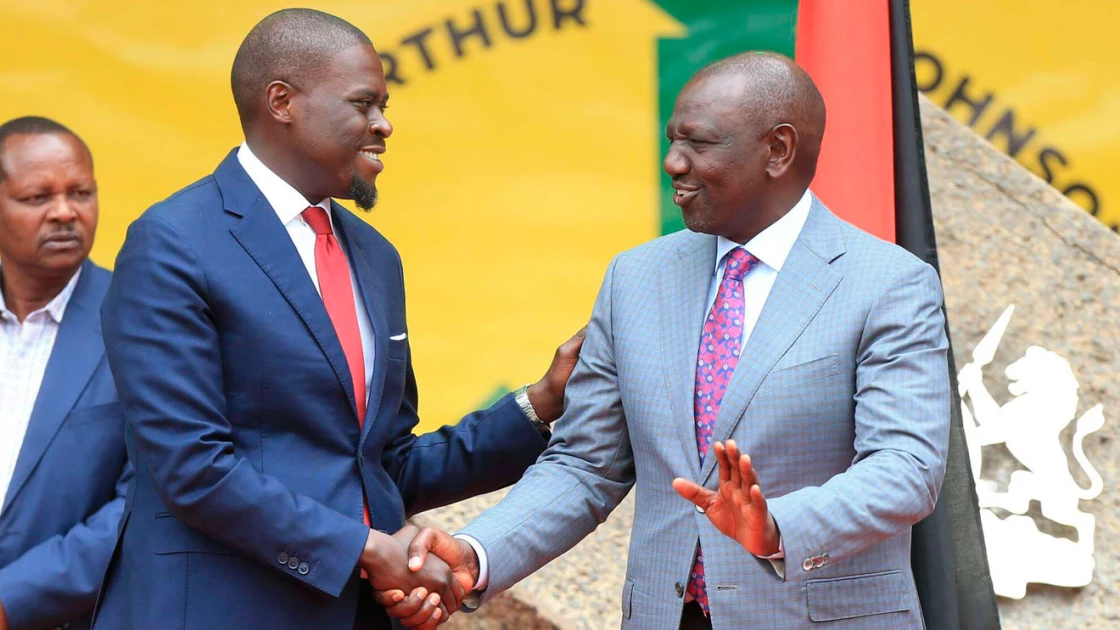
Yet, behind this forceful denial lies a more nuanced reality. While Sakaja insists no functions have been ceded, he and President William Ruto have indeed forged a new, closer working relationship for managing Kenya’s capital. This pact, however, is not a constitutional transfer of power but a carefully structured collaboration anchored in a different law, signaling a new chapter in the complex relationship between City Hall and the national government.
The Anatomy of a Deal: Partnership, Not a Takeover
The confusion began after reports emerged that Sakaja and President Ruto had agreed on a “shared responsibility formula” following a meeting at State House. The arrangement would see the national government take a leading role in critical services that have long been the Achilles’ heel of Nairobi’s administrators: garbage collection, public works, road maintenance, and water supply.
To many observers, this sounded strikingly similar to the 2020 Deed of Transfer signed by then-Governor Mike Sonko, which birthed the NMS. That move, which placed essential services under the direct control of the Office of the President, was later deemed partially unlawful by the High Court because it lacked the requisite approval from the Nairobi County Assembly.
This time, however, Governor Sakaja is adamant that the legal framework is different. He clarified that the county is not using Article 187 of the Constitution, which governs the transfer of functions between levels of government. Instead, the new pact is guided by the Urban Areas and Cities Act.
“We are pursuing procedures using the Urban Areas and Cities Act to enhance support in infrastructure,” Sakaja explained. “It is a normal partnership and special focus on Nairobi under Section 6 of the Act… No transfer of functions or NMS-like arrangement.”
This legal distinction is crucial. The Act provides a framework for co-management and joint projects between the national and county governments, allowing for shared resources and expertise without requiring a formal handover of constitutional responsibilities. It acknowledges the national government’s vested interest in the capital’s infrastructure while preserving the county’s autonomy.
What Does This Mean for Nairobi Residents?
Beyond the legal jargon, this renewed cooperation promises tangible changes for the city’s residents. President Ruto has publicly committed to working with Sakaja to elevate Nairobi’s standards, vowing to tackle the city’s most persistent problems.
“I will come here with my work on affordable housing, cleaning, and markets,” the President stated during a church service attended by both leaders. “Nairobi cannot be a city of garbage. We have sat down with the governor… I will get money from the national government so that we can add to that of the county government, so that we can clean the city of Nairobi.”
Key initiatives under this joint programme include:
•Waste Management: A top priority is the decommissioning of the infamous Dandora dumpsite. The plan involves a phased transfer of waste management to a new, modern facility in Ruai, which will convert refuse into fertiliser and energy.
•Infrastructure Overhaul: The national government, through agencies like the Kenya Urban Roads Authority (KURA) and the Kenya Rural Roads Authority (KeRRA), will support the expansion and resurfacing of roads across the city.
•Joint Programmes: A coordinated effort will focus on improving overall cleanliness, road networks, and water supply, pooling resources from both levels of government for greater impact.
A Watchful Public and a Vocal Opposition
Despite the administration’s assurances, the new arrangement has been met with a healthy dose of skepticism. The memory of the NMS, which was initially praised for its efficiency but later criticized for its lack of accountability and for undermining devolution, looms large.
Nairobi Senator Edwin Sifuna was quick to raise a red flag, echoing the legal arguments that plagued the NMS. “Constitutionally, there has to be a deed of transfer of functions. It has to be approved by the county assembly. I have seen neither,” Sifuna stated, challenging the legality of any perceived handover.
His comments highlight the delicate political tightrope Sakaja must walk. The Governor, who survived a high-profile impeachment attempt, appears to have reached a political truce with the President. This deal allows him to leverage the national government’s financial muscle and technical capacity to tackle Nairobi’s immense challenges—a task no governor has managed to accomplish alone.
However, he must do so without appearing to surrender his mandate or weaken the principles of devolution that Kenyans fought for. For the ordinary citizen, the debate over legal articles and acts is secondary. The ultimate test of this new City Hall-State House pact will be visible on the streets: cleaner neighborhoods, smoother roads, reliable water, and a sense that Nairobi is finally living up to its name as the “Green City in the Sun.”
The NMS Legacy: Lessons from a Controversial Experiment
To understand why the current arrangement has sparked such intense debate, one must revisit the NMS chapter in Nairobi’s governance history. In March 2020, under the administration of President Uhuru Kenyatta, then-Governor Mike Sonko signed a Deed of Transfer with Devolution Cabinet Secretary Eugene Wamalwa, handing over critical county functions to the newly created Nairobi Metropolitan Services.
The NMS was placed directly under the Office of the President and was tasked with managing health services, public works, transport, and water management. Proponents argued that the move would bring efficiency and professionalism to a county government that had become synonymous with dysfunction and corruption.
For a while, the experiment showed promise. Roads were repaired, markets were renovated, and there was a visible improvement in service delivery. But the honeymoon was short-lived. Critics pointed out that the arrangement bypassed the County Assembly, effectively sidelining elected representatives and undermining the very essence of devolution. The High Court later ruled that parts of the transfer were unlawful because they had not received the necessary legislative approval.
By the time Governor Sakaja took office in late 2022, the NMS deed had expired, and the functions reverted to the county government. But the scars remained. The county inherited massive debts, demoralized staff, and a public that had grown cynical about the ability of either level of government to deliver on its promises.
It is against this backdrop that Sakaja’s current collaboration with President Ruto must be understood. The Governor is acutely aware that any arrangement that even remotely resembles the NMS will be met with fierce resistance from both political opponents and the public.
Why This Time Might Be Different
So what makes this new partnership different from the NMS? According to Sakaja, the answer lies in the legal framework and the spirit of cooperation rather than coercion.
The Urban Areas and Cities Act, enacted in 2011, was designed to provide a governance structure for Kenya’s urban centers. Section 6 of the Act specifically addresses the unique status of Nairobi as the capital city, recognizing that the national government has a legitimate interest in ensuring that the seat of government and home to diplomatic missions functions smoothly.
The Act allows for performance agreements, joint projects, and shared funding arrangements between the two levels of government without requiring a formal transfer of constitutional functions. This means that while the national government can provide financial and technical support, the ultimate responsibility and accountability remain with the county government.
In practical terms, this means that when KURA or KeRRA comes in to resurface a road in Nairobi, they are doing so as partners in a joint project, not as replacements for the county’s public works department. Similarly, when the national government finances the new waste management facility in Ruai, it is an investment in a shared goal, not a takeover of the county’s sanitation mandate.
This collaborative model, if executed transparently and with proper oversight, could offer the best of both worlds: the county retains its constitutional autonomy, while the national government brings in the resources and expertise that have often been lacking at the county level.
The Political Calculus: A Truce Born of Necessity
Politics, as they say, makes strange bedfellows. The alliance between Sakaja and Ruto is a case in point. Not long ago, Sakaja was fighting for his political survival, facing an impeachment motion that many believed had the tacit approval of powerful forces within the national government.
His survival of that attempt, coupled with the President’s own political challenges, appears to have led both leaders to the conclusion that cooperation is more beneficial than confrontation. For Ruto, a functional and clean Nairobi is not just a matter of pride but also a political necessity. The capital is the face of Kenya to the world, and its chronic problems reflect poorly on his administration.
For Sakaja, the partnership offers a lifeline. Nairobi’s challenges are immense, and the county’s own revenue base, while substantial, is often insufficient to tackle the scale of infrastructure decay and service delivery gaps. By partnering with the national government, he gains access to funding and technical capacity that could transform the city and, by extension, his political fortunes.
What Nairobians Should Watch For
As this new chapter unfolds, residents of Nairobi should keep a close eye on several key indicators. First, transparency is paramount. Unlike the NMS, which operated with limited public scrutiny, this partnership must be conducted in the open, with clear agreements, timelines, and accountability mechanisms.
Second, the role of the County Assembly cannot be sidelined. While the Urban Areas and Cities Act may not require the same level of legislative approval as a constitutional transfer, the Assembly must still play its oversight role, ensuring that the partnership serves the interests of Nairobians and does not become a backdoor method of undermining devolution.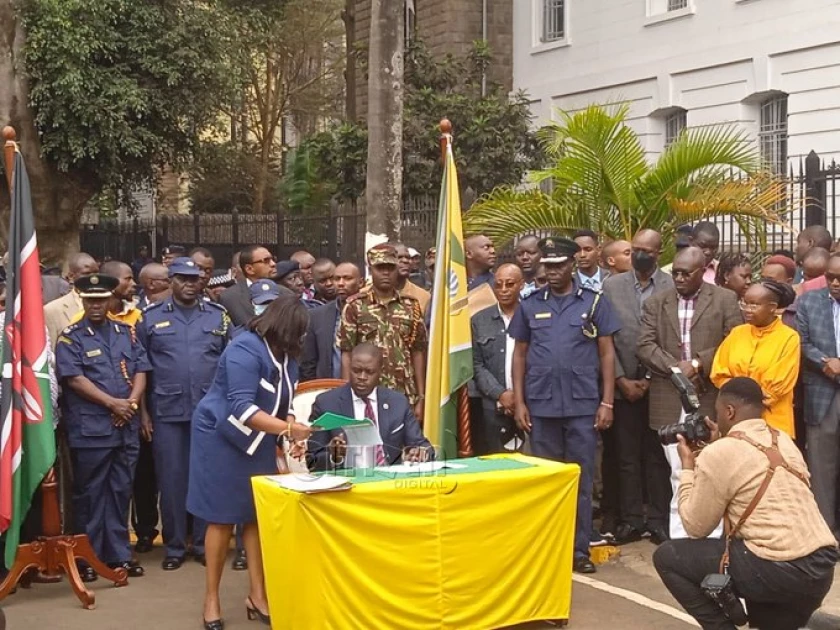
Third, results matter. The promises of cleaner streets, better roads, and reliable water are not new. Every administration has made similar pledges. What Nairobians need to see is sustained, visible improvement in their daily lives. The Ruai waste management facility, the resurfacing of major roads, and the expansion of water supply must move from blueprints to reality.
Finally, the partnership must respect the spirit of devolution. Kenya’s 2010 Constitution brought power closer to the people, and any arrangement that weakens this principle, even in the name of efficiency, risks eroding public trust in the entire system of governance.
The Road Ahead: Hope Tempered with Caution
There is cautious optimism in some quarters that this new arrangement could finally break the cycle of dysfunction that has plagued Nairobi for years. The combination of Sakaja’s local knowledge and political legitimacy with Ruto’s access to national resources and technical agencies could, in theory, deliver the kind of transformation that has long eluded the capital.
But optimism must be tempered with realism. Nairobi’s problems are not just about money or technical capacity. They are also about governance, accountability, and political will. The city has seen grand plans before, only to watch them crumble under the weight of corruption, mismanagement, and political infighting.
As Sakaja and Ruto embark on this partnership, they carry the hopes of millions of Nairobians who simply want a city that works. They also carry the burden of history, a reminder that good intentions are not enough. What matters now is execution, transparency, and a genuine commitment to putting the needs of the city’s residents above political expediency.
For now, the ghost of the NMS has been laid to rest, at least officially. But whether this new partnership will prove to be a genuine breakthrough or just another chapter in Nairobi’s long saga of unfulfilled promises remains to be seen. The streets, the markets, and the neighborhoods of Nairobi will tell the story in the months and years to come.
Published: February 11, 2026