

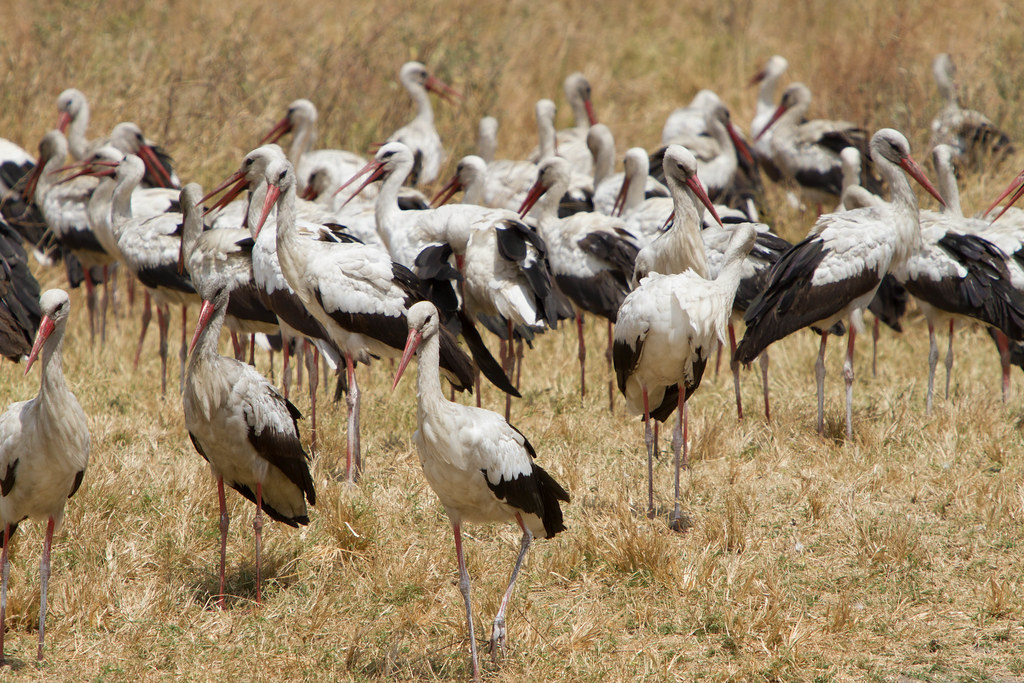
In Uganda’s border village of Ayoreri, severe food shortages driven by climate change have forced desperate villagers to resort to poisoning and killing thousands of migratory white storks and other protected birds for survival. Sam Chekwoi, a 42-year-old father of 11, explained that unpredictable droughts have decimated crops, leaving him no choice but to hunt birds using poisoned mice as bait. The birds, weakened by the toxins, are easily captured and consumed. Chekwoi estimates he has eaten over 300 storks since 2016, lamenting, “If there was an alternative, I would do it.” Despite the illegal and ecologically damaging practice, villagers see no other option to feed their families.
Farmer and conservationist Joel Cherop, 45, reports that around 3,000 storks—some migrating from as far as Poland, the Czech Republic, and Hungary—have been killed this season alone. These birds serve as the only affordable protein source for many, selling for less than $1 each. While Cherop condemns the hunting, he acknowledges the dire circumstances: deforestation and worsening droughts, exacerbated by global carbon emissions, have destroyed livelihoods. “Crop failure has topped this community’s agenda for the last decade,” he said, criticizing industrialized nations for their role in climate change.
In response, Cherop is planting fruit trees and creating jobs to restore the land and provide alternatives. However, he emphasizes that the villagers are not acting out of malice but sheer desperation. “These are hungry young people with no food,” he said, underscoring the urgent need for sustainable solutions to address both ecological preservation and human survival in climate-vulnerable regions.


